


Wrapping up ISCT 2026
ISCT2026 was held last week in lovely Montreal, Canada. We had three days of excellent presentations from leaders in the CT community, as well as rich conversations and time with each other and our meeting sponsors.
I want to congratulate the winners of the Willi A. Kalender Early-career Investigator Award:
First place: Ian Mark, Mayo Clinic, for his presentation, "Photon Counting Detector CT for the Identification of Pituitary Microadenomas in Cushing Disease."
2nd place: Emma Verelst, Vrije Universiteit Brussel, Universitair Ziekenhuis Brussel, for her presentation, "Single-scan endoleak characterization using dual-contrast photon-counting CT: iodine-gadolinium separation,"
and 3rd place: Aria Salyapongse, University of Wisconsin – Madison, for her presentation, "Errors in Iodine Quantification due to Non-Water Backgrounds."
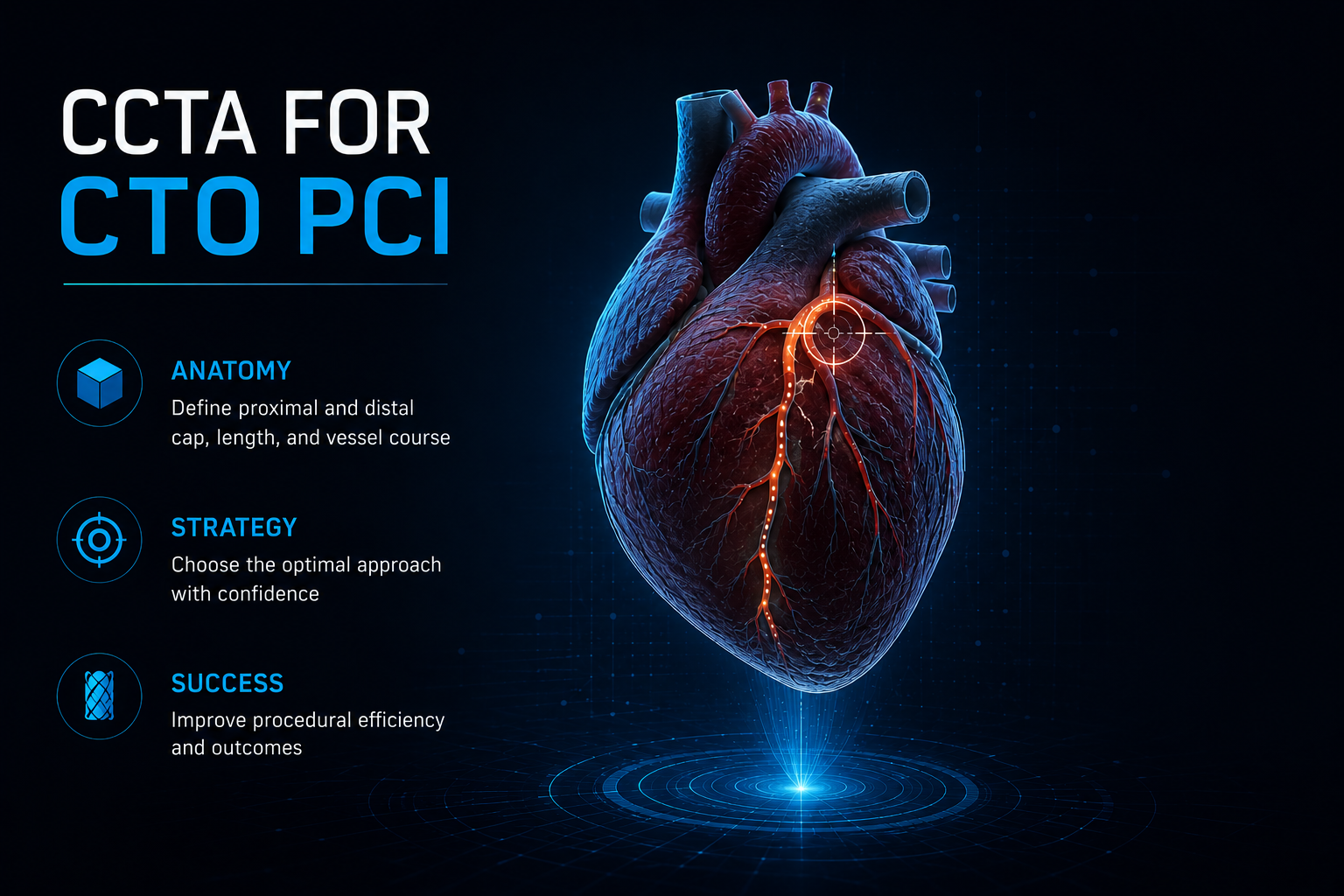
CCTA for CTO PCI: A Useful Tool That Remains Underused
CCTA for CTO PCI: A Useful Tool That Remains Underused
Author: Fabiana Andrade Melchiori
Chronic total occlusions (CTOs) represent some of the most technically demanding lesions in interventional cardiology. Procedural success depends heavily on anatomical detail: where the proximal cap sits, how long the occluded segment is, how much calcium is present, and whether the distal vessel is a viable target. Invasive coronary angiography, by definition, cannot opacify a vessel that is completely occluded, making procedural planning difficult.
A systematic review published in The American Journal of Cardiology examined the accumulated evidence on coronary CT angiography (CCTA) as a preprocedural planning tool for CTO PCI. The authors evaluated CCTA's role in lesion characterization, prediction of procedural difficulty, and procedural guidance.
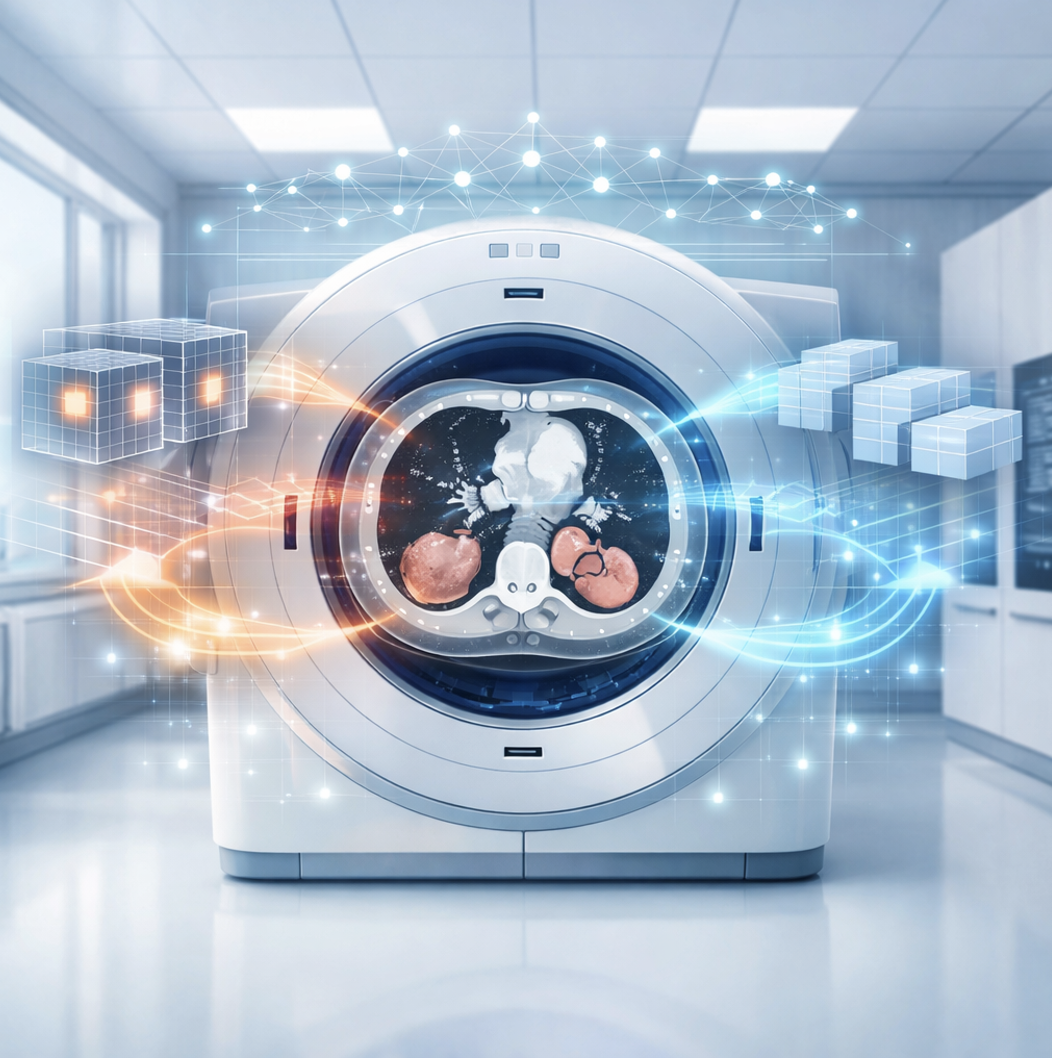
Deep Learning Image Reconstruction in CT: What It Holds for the Future
Computed tomography has come a long way from filtered back projection, but the next major leap may be deep learning image reconstruction, or DLIR. In CT, DLIR is already showing that it can reduce noise, preserve diagnostic detail, and shorten reconstruction time, while supporting meaningful dose reduction.
A Brief History: From Filtered Back Projection to Deep Learning
CT reconstruction began with filtered back projection, which was fast and mathematically simple but very sensitive to noise. Iterative reconstruction improved low-dose image quality, but often at the cost of unnatural, “plastic” image texture and longer processing times.
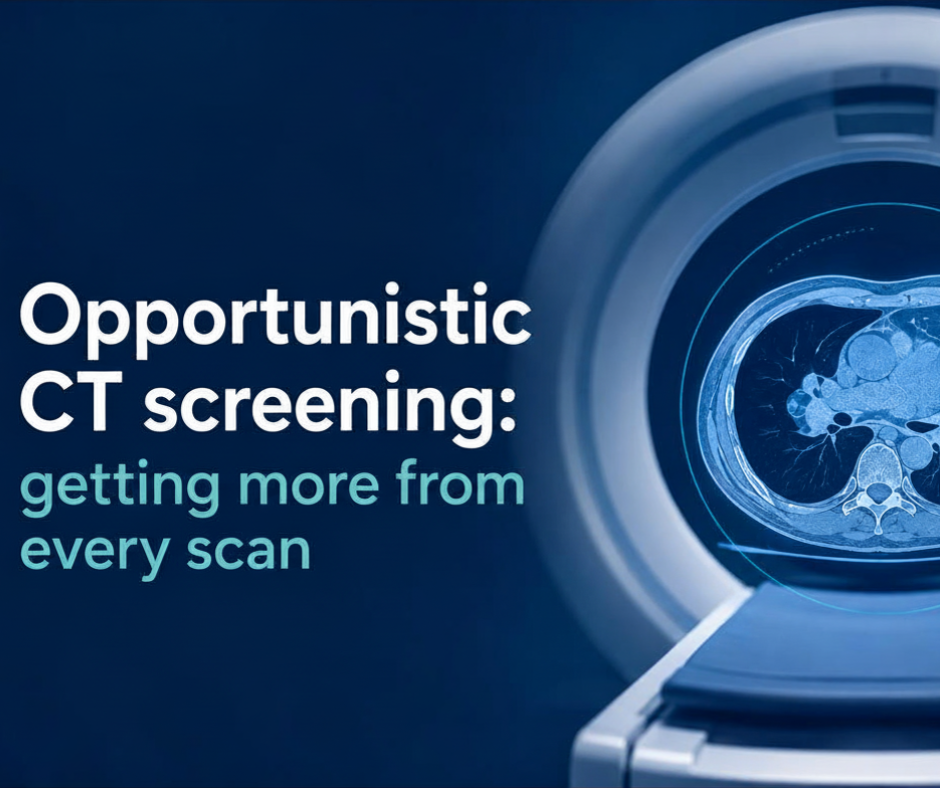
Opportunistic CT screening: getting more from every scan
Author:
Dr. Fabiana Andrade Melchiori, from Beth Israel Deaconess Medical Center
Computed tomography (CT) has always been one of the pillars of modern diagnostic imaging. It is usually ordered for a specific clinical question, read for that indication, and filed. Recently, the concept of opportunistic CT screening has emerged: the extraction of clinically meaningful secondary findings from already-performed routine CT exams, with no additional radiation exposure, additional imaging, or changes to the original scan protocol. Powered by artificial intelligence (AI), it represents a promising emerging development in CT practice.
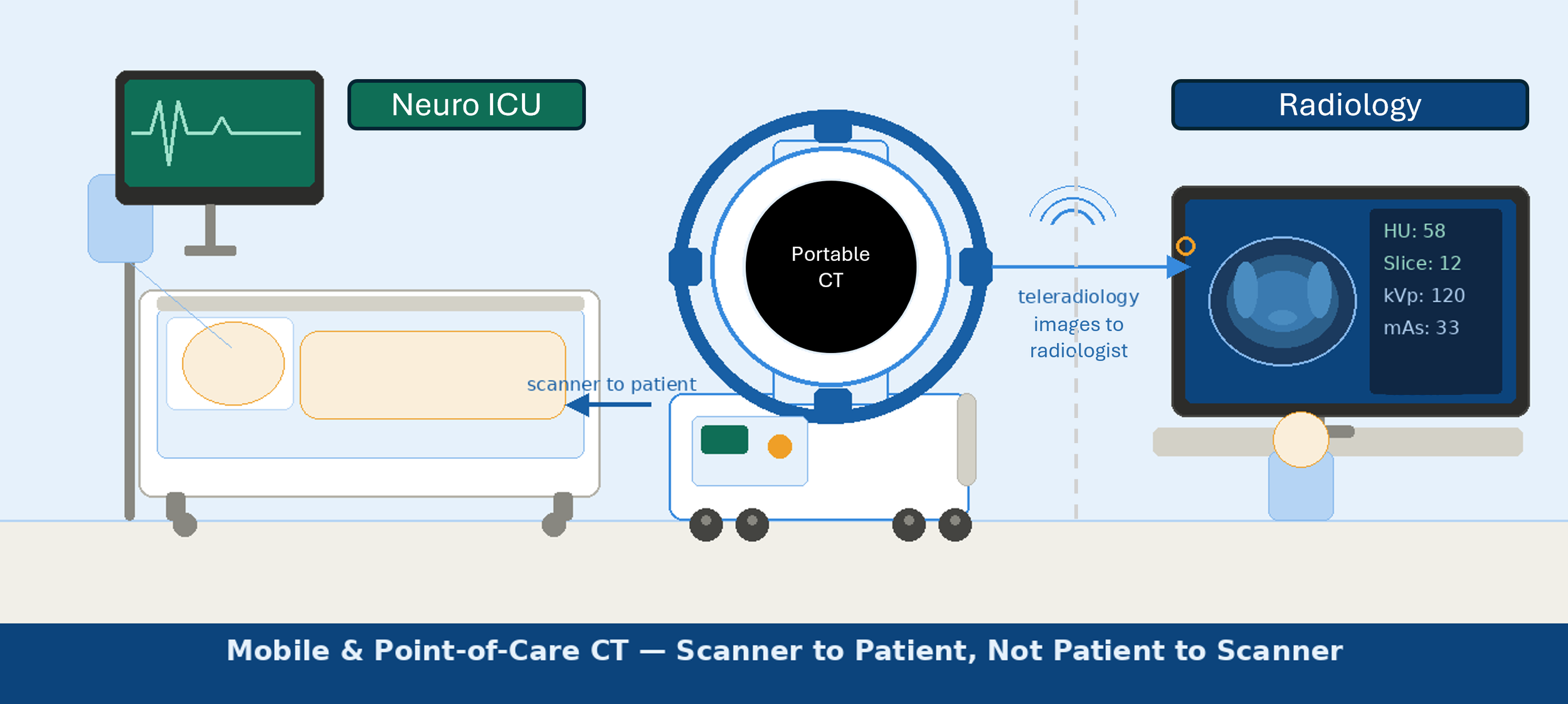
Mobile & Point-of-Care CT: A Radiologist’s Perspective
Author: Dr. Shailendra Katwal, from Beth Israel Deaconess Medical Center
The Paradigm Shift: Scanner Goes to the Patient
The conventional model of CT imaging has always demanded that the patient travel to the scanner. For the majority of patients, this is unremarkable. For the critically ill — the ventilator-dependent ICU patient, the hemodynamically unstable trauma case, the acute stroke in the ambulance bay — this journey carries real clinical risk. Mobile and point-of-care (POC) CT inverts this model entirely, and as radiologists, it is essential we understand both its diagnostic capabilities and its limitations.
Photon-Counting CT in 2026: From Innovation to Clinical Impact
Photon-counting CT (PCCT) continues to emerge as one of the most significant advances in computed tomography in recent decades. While early development focused on detector physics and feasibility, recent progress has accelerated translation into clinical practice, with expanding applications across cardiovascular, neuro, musculoskeletal, and oncologic imaging.

CT Radiation Dose Reduction With Preserved Diagnostic Performance: How Far Have We Come Over 25 Years?
Dose reduction in CT imaging has been a topic of considerable interest for the last 25 years. Many new technologies have been introduced into commercial systems that individually can reduce doses by approximately 10-40% each, depending on the diagnostic task and starting dose level. Over time, these technologies have not only reduced radiation doses but have allowed improvements in image quality that otherwise would have raised doses.

Shared Decision-Making: A Missed Opportunity or a Key to Improving CT Lung Cancer Screening Rates?
Despite being one of the most effective tools for early lung cancer detection, CT lung cancer screening remains underutilized across the United States. Even more than a decade after national guidelines recommended its use for high-risk populations, overall screening rates remain far below target.
One potential solution may be hiding in plain sight: meaningful, proactive conversations between clinicians and patients.